My brother is 6'2". I'm 5'9". We have the same parents, ate the same food growing up, and had the same childhood environment. So why the five-inch gap? For years, my mom joked that he "got all the tall genes." Turns out, she wasn't entirely wrong—but the real answer is way more interesting than that.
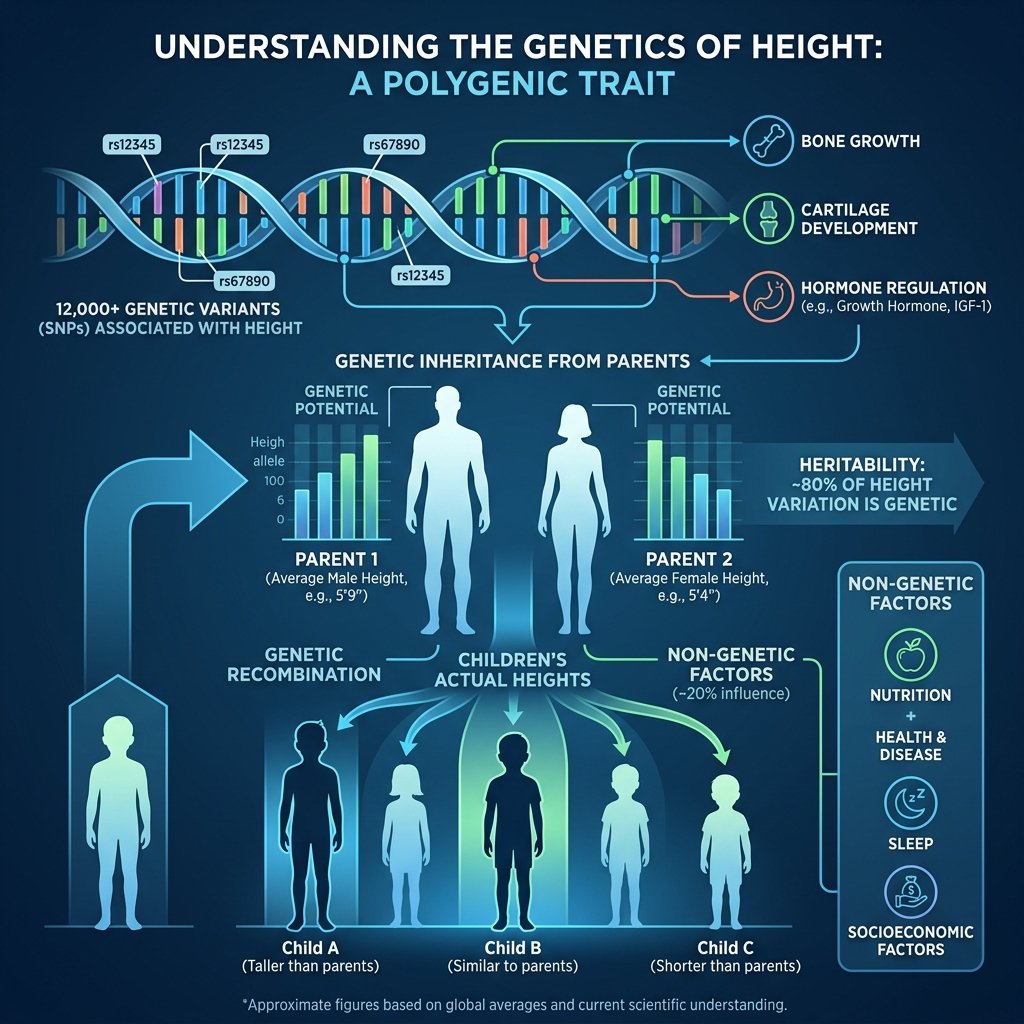
Height is one of the most heritable human traits, meaning genetics play a huge role. But it's not a simple one-gene situation. Over 700 genetic variants influence how tall you grow, and siblings inherit different combinations of those variants from their parents. That's why two kids from the same family can end up at opposite ends of the height spectrum.
How Height Genetics Actually Work
Unlike traits controlled by one or two genes (like some blood types), height is polygenic—influenced by hundreds of genes scattered across your DNA. Each gene contributes a tiny effect, and they all add up to determine your final adult height.
Here's the key: when parents have kids, each child gets a random 50% of genes from Mom and 50% from Dad. But which 50%? That's the lottery. One sibling might inherit more of the "tall" variants, while another gets more "short" variants—even though they share the same gene pool.
The 700+ Gene Factor
Recent genome-wide studies have identified over 700 genetic variants associated with height. Some of the most impactful genes include:
- HMGA2 — Each copy of the "tall" variant adds about 0.4 cm to your height
- GDF5 — Affects bone growth in the legs and spine
- FGFR3 — Regulates cartilage-to-bone conversion during growth
- GH1 — Codes for growth hormone production
But here's the catch: no single gene has a massive effect. HMGA2, one of the strongest known height genes, only accounts for about half a centimeter per variant. Your final height is the sum of hundreds of these tiny genetic nudges.
Height is about 80% genetic and 20% environmental (nutrition, health, sleep). That 80% comes from the combined effect of 700+ genes, not one "tall gene."
Why Siblings Grow to Different Heights
Even though siblings share roughly 50% of their genes, the specific combination they inherit varies. Think of it like shuffling a deck of cards—same deck, different hands every time.
Genetic Recombination
During reproduction, your parents' chromosomes mix and match in a process called recombination. This creates unique genetic combinations in every child. So while you and your sibling both get genes from the same parents, you don't get the same selection.
Example: Let's say your mom has 400 "tall" variants and 300 "short" variants. Your dad has 350 "tall" and 350 "short." You might inherit 375 "tall" variants total, while your brother inherits 425. That difference—across hundreds of genes—can add up to several inches.
The Environmental Factor (20%)
Genetics explain about 80% of height variation, but the remaining 20% comes from environment. This includes:
- Nutrition: Adequate protein, calcium, vitamin D during growth years
- Health: Chronic illnesses or growth hormone deficiencies can stunt growth
- Sleep: Growth hormone is released during deep sleep—kids need 9-11 hours
- Stress: Extreme stress can affect growth hormone levels
Two siblings eating the same meals and living in the same house usually have similar environmental conditions, so most sibling height differences come from genetics. But if one child had severe health issues during growth years, that could widen the gap.
Growth Patterns: When Height Happens
Kids don't grow at a steady rate. Height comes in spurts, and timing varies between siblings.
| Growth Phase | Age Range | What Happens |
|---|---|---|
| Infancy | 0 - 2 years | Rapid growth (~10 inches in first year). Mostly driven by nutrition. |
| Childhood | 2 - 10 years | Steady growth (~2-3 inches/year). Genetics start playing a bigger role. |
| Puberty | 10 - 17 years | Major growth spurt (3-5 inches/year). Timing varies widely—some start at 10, others at 14. |
| Late Growth | 17 - 21 years | Final 1-2 inches (if any). Growth plates close. Boys often grow later than girls. |
Siblings often hit puberty at different ages, which can temporarily make one appear much taller. The "late bloomer" might catch up—or they might not, depending on their genetic blueprint.
Can You Predict Your Child's Height?
There's a common formula parents use to estimate adult height, but it's rough at best:
For Boys: (Mother's height + Father's height + 5 inches) ÷ 2
For Girls: (Mother's height + Father's height - 5 inches) ÷ 2
This gives you a ballpark range, but it's not precise. The actual result can vary by 4-5 inches in either direction because of genetic recombination and environmental factors.
Why the Formula Isn't Perfect
The mid-parental height formula assumes an average distribution of height genes. But as we've seen, siblings don't inherit an "average" set—they each get a unique combination. So while this formula works for population averages, it's less accurate for individual predictions.
Pediatricians use growth charts and bone age X-rays for more accurate predictions, but even those aren't foolproof until growth plates close in late adolescence.
Common Myths About Height
Myth: You'll Be Exactly the Average of Your Parents' Heights
Nope. You could be taller or shorter than both parents depending on which genetic variants you inherit. Plenty of families have one kid who towers over everyone and another who's noticeably shorter.
Myth: Stretching or Hanging Exercises Make You Taller
These don't increase bone length or affect your genetic height potential. Good posture can make you appear taller, but it won't change your actual height.
Myth: Boys Always Grow Taller Than Their Moms
Usually, but not always. Some boys inherit fewer "tall" variants and end up around their mom's height or even shorter. It's uncommon but genetically possible.
What Actually Affects Final Height
If you want to maximize your child's genetic height potential, focus on what you can control:
- Nutrition: Balanced diet with enough protein, calcium, and vitamins
- Sleep: 9-11 hours for school-age kids, 8-10 for teens
- Physical Activity: Regular exercise supports healthy growth
- Healthcare: Address chronic conditions or hormone deficiencies early
These won't override genetics, but they ensure your child reaches their maximum genetic potential. Poor nutrition or chronic illness during growth years can prevent someone from hitting their genetically programmed height.
When to See a Doctor
Most height variation is normal, but consult a pediatrician if:
- Your child falls below the 3rd percentile on growth charts
- They grow less than 2 inches per year during childhood
- Puberty hasn't started by age 14 (girls) or 15 (boys)
- There's a sudden stop in growth before expected
These could indicate growth hormone deficiency, thyroid issues, or other treatable conditions.
The Bottom Line
Height differences between siblings are completely normal and expected. With 700+ genes involved, each child inherits a unique combination of height variants from their parents. Add in slight differences in nutrition, health, and growth timing, and it's no surprise that brothers and sisters often differ by several inches.
Your genes set the blueprint, but environment fine-tunes the final result. Focus on what you can control—good nutrition, sleep, and healthcare—and let genetics handle the rest.
If you're curious about other genetic traits that vary between siblings, check out our article on skin tone genetics for another example of complex inheritance.